

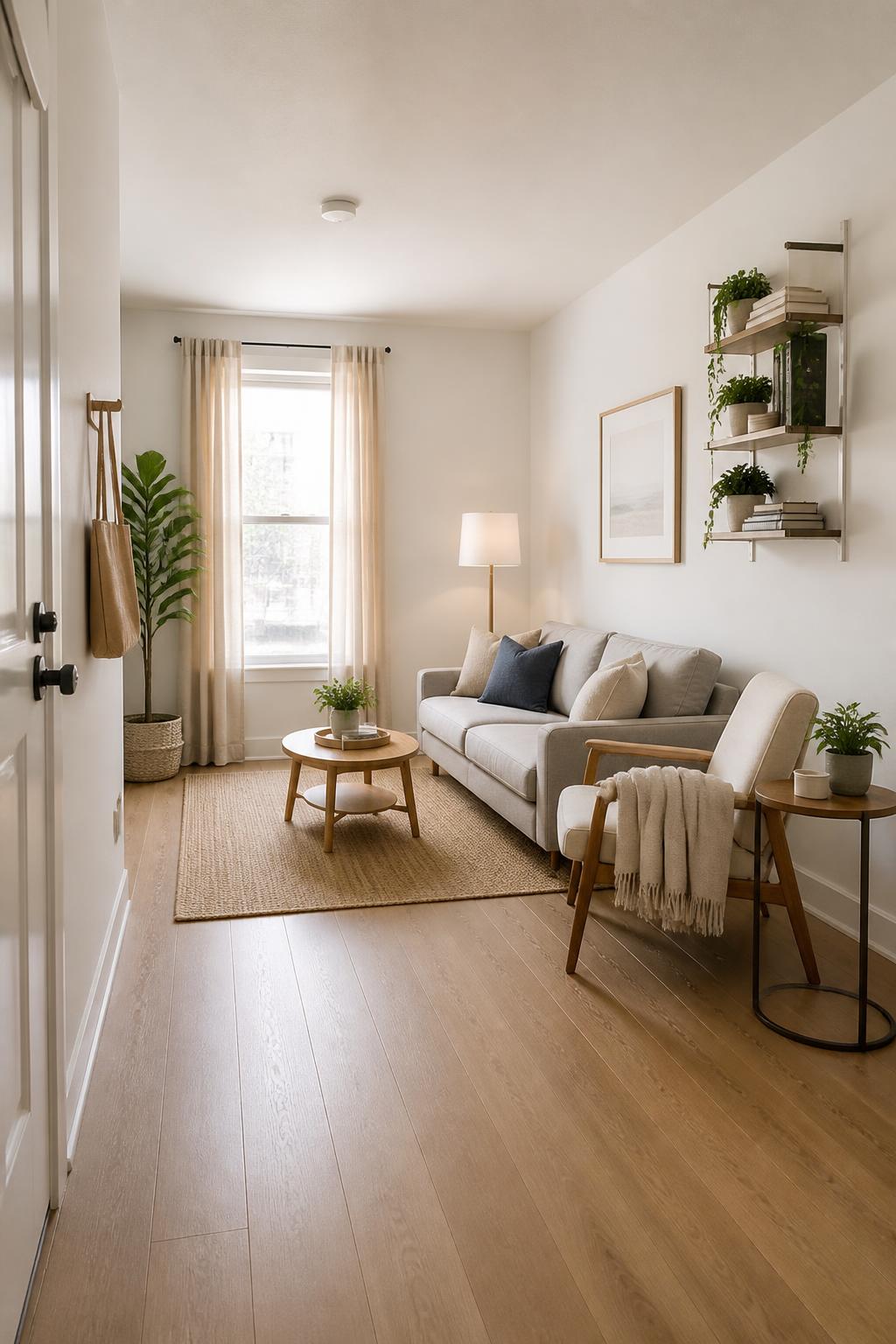
1. Letting furniture block the main route. A coffee table, side chair, or storage basket can quietly turn the path from the entry to the seating area into an obstacle course. Identify the route you use most, then shift or remove anything that interrupts it before filling any leftover corner.
2. Pushing every piece against a wall. Wall-to-wall placement can leave a large, awkward empty patch in the center while seating feels disconnected. Pull the sofa or a chair forward slightly when the room allows, and use a rug or coffee table to define one compact conversation zone.
3. Keeping oversized gaps between furniture. Not every gap is useful space. If a side table is too far from the sofa or chairs are spread too widely apart, the room can feel fragmented without becoming more functional. Bring frequently used pieces within comfortable reach while preserving the main walking path.
4. Using the floor for every storage need. When books, media, and everyday items all live in low floor-level furniture, the room can become crowded fast. Move lighter storage upward with wall-mounted shelves or a narrow vertical unit, and keep only the pieces that earn their floor space.